



Google is, without a doubt, one of the heaviest hitters in the technological race. When the best of the team gather together to unveil their newest projects, people from the average tech geek to software defined storage vendors stop and listen. In the 2016 Google I/O, some pleasant upgrades and some jumps towards the next level of our futuristic modern lives were unveiled.
It’s easy to get confused by all the new technical jargon that seems to be constantly spilling out of our computer screens. By now, you’ve probably heard about big data as a service, machine learning, and now deep learning, but differentiating between them isn’t always the easiest thing to do. The temptation may even be to ignore them, but all of these terms are actually a pretty big deal.
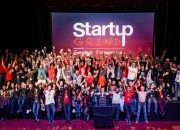
Community. My biggest take away from Startup Grind Conference 2016 is how genuinely the organization is committed to uniting and helping startups accelerate together on a global level. Being that I devote my life connecting quality people in the LA tech ecosystem with WeAreLATech , I know how rare it is to find people like Derek Anderson. Derek Andersen founded Startup Grind, he moderated many of the fireside chats at Startup Grind Conference 2016 on the main stage and gave opening and closing remarks, but what caught my attention is how he spoke; his tone of voice and the types of questions and comments he made.
Much effort and study has been expended to determine how a web site can better convert its visitors to paying customers. While there have been some rather profound successes in the marketplace, there still exists enough uncertainty for many business owners and web developers to hesitate before making a decision on how best to optimize their sites.
6 Entrepreneurs share their predictions for this year’s evolution of online industries, which will be key for small businesses across the globe in 2016. Increased wireless connections will force both individuals and businesses to readdress the costs and issues of online security. This will also drive mobile usage and the growth of industries such as e-commerce and fintech, with a focus on streamlining and online task management integration tools supporting business use.
After conducting indoor tests for several months, Walmart recently asked U.S. regulators if it could test drones (a.k.a. “unmanned aircraft systems” or UAS) for home delivery, curbside pickup and checking warehouse inventories. The news came as no surprise to anyone. Walmart’s been investing heavily in its e-commerce capabilities — too heavily for some investors’ tastes, in fact — in an effort to make up ground on Amazon and Google, both of which are already deep into the drone development process.