


Savings search engine Chippmunk, that helps consumers to instantly find great deals online has raised $750,000 seed round as the peak holiday shopping season intensifies.




Savings search engine Chippmunk, that helps consumers to instantly find great deals online has raised $750,000 seed round as the peak holiday shopping season intensifies.

Prior to joining Science, Monahan was co-founder and CEO AlphaBoost, a Facebook advertising reporting software builder. He also co-founded The Comotion Group, which was acquired by Sharethrough and was previously advisor to Wildfire, which Google acquired for $350M.

There’s a famous scene in Pirates of Silicon Valley (a movie that chronicled the origins of Microsoft and Apple) in which Bill Gates is meeting with IBM executives. The IBM executives agree to license software from Microsoft because “there’s no money in software anyways.”
The IBM executives weren’t stupid. They failed to recognize an inflection point in technological history in which profits would shift from hardware to software.

Forget visits to random restaurants, myfab5 uses the power of the crowd to help you search for the best restaurant in town. The platform connects foodies to restaurants for a win-win situation for both parties.

Hypothesis: users of every major computing platform have come to consider each platform indispensable for their daily activities in both consumer and enterprise contexts. Let’s examine each of the major computing platforms to understand this assertion:

Commerce and trade are fundamentally based on exchanging asymmetries in one another’s ability to produce value at a given cost. As such, commerce intrinsically creates mutual value. That’s why it works. Moreover, the option to trade with more parties creates more value by fostering larger volumes of and more competitive trading.

SoCal Code Camp is at it again, getting together an amazing pool of experts to speak in front of fellow developers and developers-in-training here in Los Angeles. The event runs for two days from November 9th to 10th on the USC campus. This fun conference will have over 85 sessions on various technologies including Web Development, Mobile, Ruby , Javascript and more. And it’s not just strictly coding, they will also have a few sessions dedicated to Design and even Project Management.

What if there’re opportunities? What would they look like? What can we learn from the rise of smartphone apps to assess the opportunities for consumer Glass businesses?
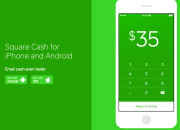
Forget checks, ATMs and money transfer services, Square has introduced Square Cash; a service that allows users to send money in form of an email, a move set to make peer-to-peer money lending and eCommerce simpler for everyone.

In twenty years, Fiber will be one of Google’s most valuable assets. Fiber is a genius long-term strategic play. Apple, Google, Facebook, and Amazon are striving to be the super-mega technology company that owns every layer of the value chain. Google’s vision is the most ambitious of its peers. To understand that assertion, let’s observe how and when Google encroached on each layer of the technology value chain required to access any web service.